Common delays in South Kensington rubbish disposal and solutions
Posted on 12/06/2026

If you have ever booked a clearance and then found yourself staring at a pile of bags, furniture, or builder's rubble while the clock keeps ticking, you already know how frustrating rubbish delays can be. In South Kensington, a disposal job can slow down for all sorts of everyday reasons: tight access, parking pressure, missed item lists, building rules, and simple scheduling bottlenecks. This guide to Common delays in South Kensington rubbish disposal and solutions breaks down what tends to go wrong, why it matters, and what you can do to keep the job moving without the stress.
We will look at the practical causes, the best fixes, and the small preparation steps that make a surprisingly big difference. And yes, a few of them are the sort of thing people only remember after the van has already arrived. Let's save you that little headache.
- Why delays matter in South Kensington
- How rubbish disposal delays usually happen
- Why solving delays early pays off
- Who this guide is for
- Step-by-step ways to avoid delays
- Expert tips that really help
- Common mistakes to avoid
- Useful tools, resources, and recommendations
- Compliance and best practice
- Options and comparison table
- Real-world example
- Practical checklist
- Conclusion
- Frequently asked questions
Why Common delays in South Kensington rubbish disposal and solutions Matters
Delays in rubbish removal are not just an inconvenience. In a busy part of London like South Kensington, they can create knock-on problems very quickly. A missed collection can block a hallway, delay a renovation, make a tenancy handover awkward, or leave a business with clutter that gets in the way of trading. For homeowners, it can mean living with waste longer than planned. For landlords, it can slow a turnaround between occupants. For offices, it can turn a tidy-up into a messy second visit. Not ideal.
South Kensington also has the kind of environment where logistical friction shows up fast. Narrow roads, controlled parking, shared entrances, basement properties, mansion blocks, and timed access windows all add layers. When any one layer is overlooked, the whole job can drift. That is why understanding the delay points matters so much: it helps you plan a clearance that actually happens on schedule, rather than one that sounds straightforward on paper and then gets complicated by Thursday afternoon.
There is also a trust angle here. When a disposal job is delayed, people start wondering whether the issue is the waste itself, the access, the booking process, or the provider. A clear plan cuts through that uncertainty. If you know what usually slows things down, you can prepare smarter and choose a service that fits the property, the waste type, and the timing you need.
How Common delays in South Kensington rubbish disposal and solutions Works
Most rubbish disposal delays are less mysterious than they first appear. In practice, the job usually follows a simple chain: enquiry, item assessment, quote, booking, arrival, loading, and removal. A delay can happen at any point in that chain, and South Kensington properties tend to expose weak spots more quickly than a standard suburban pickup.
For example, if the quote is based on incomplete information, the team may arrive expecting a quick two-room clearance and instead find a heavier load, fragile items, or a flight of stairs with no easy parking nearby. That can lead to a revised plan, extra time on site, or a second visit. Likewise, if access details are unclear, the van may need to park further away than expected, which adds walking time and loading time. On a calm street, that is annoying. On a tight schedule, it can be the difference between same-day completion and a postponed return.
The best solutions are mostly about accuracy and timing. You give a fuller picture up front, the disposal team plans the right vehicle and crew, and the collection window is set with real-world conditions in mind. A lot of delays are preventable. Not all, but a lot. And that is the good news.
Common delay points you will see in the real world
- Access problems such as narrow entrances, basement steps, lift restrictions, or loading bay limits
- Parking constraints that force the vehicle to stop farther away than expected
- Unclear waste lists where the job is bigger or different from the original description
- Building rules that limit collection times or require advance notice
- Sorting issues when items need separation before loading, especially mixed rubbish
- Traffic and timing pressure around busy routes, school times, or local events
- Compliance checks for certain materials or specialist loads
Sometimes a job is delayed for something very mundane, like a missing key or a concierge who was not told the team was arriving. You do not need drama for a delay to happen. A small gap in coordination is enough.
Key Benefits and Practical Advantages
Solving delays early gives you more than a faster collection. It improves the whole experience. You get a clearer quote, a more reliable arrival, less disturbance for neighbours, and a better chance of getting everything cleared in one visit. That is especially helpful in South Kensington, where property layouts can be quirky and time can be tight.
One of the biggest practical advantages is reduced disruption. If waste is removed in one well-planned visit, you avoid the stop-start pattern that can disrupt trades, viewing schedules, office work, or domestic routines. It also lowers the risk of extra handling. The more times items are moved, the more chance there is for accidental damage or just plain annoyance. Nobody wants a scratched stair rail because the job had to be shifted around.
There is a financial benefit too. A well-prepared disposal often avoids avoidable waiting time, rebooking, and extra labour. For comparison planning, many customers look at pricing and quotes alongside the type of service they need, because a precise brief usually leads to a cleaner estimate. If you are dealing with more specific loads, such as an builders waste disposal service or an office clearance, that upfront detail becomes even more valuable.
Expert summary: The fastest rubbish disposal jobs in South Kensington are rarely the luckiest ones. They are the best briefed, the most access-aware, and the ones where the waste type has been described honestly from the start.
Who This Is For and When It Makes Sense
This topic matters to quite a wide mix of people, which is why the delays show up in different ways depending on the situation. A family clearing a loft is dealing with different problems from a shop replacing stock room fittings or a landlord emptying a flat between tenancies. The basic friction is the same, but the details change.
You will find this especially useful if you are:
- moving house and need a room, flat, or whole property cleared quickly
- managing a renovation and want waste removed without holding up trades
- running a business where clutter affects safety or presentation
- dealing with bulky items like sofas, wardrobes, mattresses, or appliances
- clearing a garage, loft, basement, or storage area with awkward access
- handling a probate, end-of-tenancy, or downsizing situation
If your property has stairs, no lift, controlled entry, or limited outside space, this becomes relevant very quickly. South Kensington has plenty of elegant buildings, but some of them are not exactly designed for easy waste movement. Nice to live in, tricky to load from. That is the trade-off.
It also makes sense when timing is tight. If you need rubbish collected before decorators arrive, before handover, before a party venue is set up, or before new furniture comes in, even a short delay can create a domino effect. In those cases, services like same-day rubbish collection near South Kensington Station can be helpful when availability and access line up, while furniture removal or house clearance may be better when the volume is larger and more mixed.
Step-by-Step Guidance
If you want to avoid delays, the best move is to treat the disposal as a small logistics project. That sounds grander than it is. Really, it means giving the job enough detail for the collection team to plan well.
- List everything that needs removing. Be specific. "Two chairs" is useful. "Some old furniture" is not.
- Separate general rubbish from specialist items. White goods, mattresses, builders waste, green waste, and office material may need different handling.
- Check access before you book. Note stairs, lifts, entry codes, parking restrictions, gate widths, and any loading bay rules.
- Choose a realistic time window. If the street is busy at school run time or around midday deliveries, say so early.
- Prepare the waste in one place if you can. A tidy staging area saves time on the day.
- Tell the building manager or concierge. This small step prevents a lot of "sorry, who are you?" moments at the entrance.
- Confirm the collection details the day before. A quick check can catch changes before they become delays.
For larger or more complex jobs, ask whether the waste can be taken in one visit or whether it needs staged removal. That question is particularly useful for appliance disposal, garden waste removal, and loft clearance, where the load can change quickly once work starts.
And one small but important point: if there is anything unusual, say it plainly. A rusty filing cabinet on the third floor is not the end of the world, but it is the sort of detail that changes how a team plans the lift, the vehicle, and the time on site.
Expert Tips for Better Results
After a while, you start seeing patterns. The smoothest jobs usually share the same habits, and they are not glamorous habits at all. They are the boring, reliable ones. Truth be told, boring is often what you want on collection day.
Practical tips that reduce delays
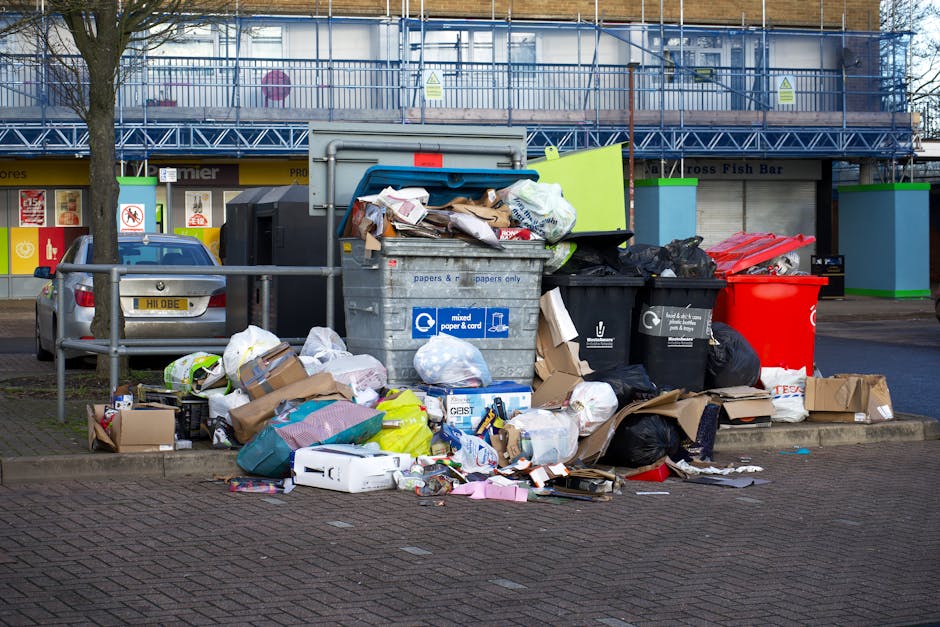
- Photograph the waste pile before booking. Visuals are often more useful than a long description.
- Measure awkward items if they need to pass through narrow halls or stairwells.
- Keep a spare contact number handy in case the team needs clarification on arrival.
- Move pets, prams, and valuables out of the way before the crew arrives.
- Leave the route clear from the waste location to the exit.
- Plan around local activity if your street gets heavy traffic or event spillover.
- Use a provider that explains process clearly rather than one that sounds fast but vague.
If you are comparing options, it can also help to read about the range of services available and the company's approach to licensing and compliance. That does not remove delays by magic, but it does tell you whether the operator is set up for proper handling, sorting, and transport. In our experience, clearer operators tend to run smoother jobs. Funny how that works.
One more tip: if you are trying to squeeze rubbish removal in before a major change, give yourself breathing room. A morning slot can be fine, but if you need the room empty before decorators, cleaners, or movers arrive at noon, a little extra buffer is worth its weight in tea and biscuits.
Common Mistakes to Avoid
A lot of delays come from simple, avoidable mistakes. The good news is that these are usually easy to fix once you know what to look for.
- Underestimating the volume of waste and booking too small a vehicle or too little time
- Forgetting access details such as a locked gate, basement steps, or no-lift access
- Mixing restricted items with general rubbish without warning
- Not confirming parking arrangements before the team arrives
- Leaving items unprepared so the crew has to sort, separate, or disassemble on site
- Assuming same-day availability will always be possible, especially at busy times
- Booking on a vague description and hoping the rest sorts itself out
That last one causes more trouble than people expect. "A few bits and pieces" can mean a bag or a van-full. Better to be slightly too detailed than not detailed enough. If you are ever unsure, over-explain a bit. It feels awkward for five seconds, but it saves a lot more time later.
Another common issue is trying to make the collection happen around everyone else's schedule without checking the building's own rules. In a mansion block or managed property, the collection might need advance notice, an agreed lift booking, or a specific access slot. Miss that, and the waste team may be ready while the building isn't. Not a great start.
Tools, Resources and Recommendations
You do not need fancy tools to reduce rubbish disposal delays. What you need is a decent bit of preparation and a few practical habits. Still, some simple aids do help.
- Phone photos of the waste and the access route
- A rough room-by-room list if you are clearing a flat or house
- A measuring tape for bulky furniture or appliance openings
- Building or concierge notes for access times, lift bookings, or entry requirements
- A calendar reminder for confirmation the day before collection
If you want to get a better sense of timing and job size, you may also find it useful to look at rubbish clearance rates from Earls Court to South Kensington as a local planning reference, or to read a practical breakdown of access problems for rubbish collection in SW7. Those pages are especially handy if your property has awkward entry points or you are trying to estimate the likely scale of the job.
For readers who want to keep waste handling tidy and responsible, recycling and sustainability is worth reviewing too. A better sorting process not only supports recycling where possible, it can also prevent last-minute delays caused by trying to decide what goes where on the day.
Law, Compliance, Standards, or Best Practice
With rubbish disposal, compliance matters because some waste types need to be handled carefully, and because customers need confidence that waste is being transferred properly. In the UK, anyone arranging disposal should be sensible about who they use, what they hand over, and how specialist items are treated. That is especially true for commercial clearances, builders waste, and anything potentially hazardous.
Best practice usually includes:
- using a properly registered and insured operator
- describing the waste accurately before booking
- keeping dangerous, sharp, or restricted materials separate unless agreed otherwise
- checking that the provider can explain how waste will be sorted and taken away
- making sure access arrangements are legal and safe for everyone involved
This is also where trust signals matter. Pages such as insurance and safety, about the company, and the site's terms and conditions can help you understand how a provider works before the van turns up. If something goes wrong, you want a process that is transparent, not improvised.
For businesses, the bar is a bit higher because you are balancing waste removal with operational continuity and sometimes with tenant, staff, or customer access. That is why commercial waste removal and office clearance are best planned as proper logistically managed jobs, not just "pop round and take a look" tasks.
Options, Methods, or Comparison Table
There are a few different ways to deal with waste in South Kensington, and the right one depends on volume, urgency, and access. Here is a simple comparison to help you think it through.
| Method | Best for | Typical strength | Main delay risk |
|---|---|---|---|
| Scheduled rubbish collection | Smaller household or mixed loads | Predictable and straightforward | Access or parking issues |
| Same-day collection | Urgent clearances and last-minute jobs | Fast turnaround | Availability can be limited |
| House clearance | Whole properties or large room-by-room jobs | Efficient for bigger volumes | Underestimating the size of the load |
| Builders waste disposal | Renovations and trade waste | Good for heavy, messy loads | Mixed materials or access bottlenecks |
| Furniture or appliance removal | Bulky single items or a few large pieces | Quick if access is clear | Stairs, lifts, or disassembly delays |
There is no single "best" method for everyone. A quick flat clearance near a station entrance is a different beast from a basement office with stacked filing cabinets. If your timing is tight, a service designed for fast turnarounds may suit you. If the load is bigger and more complex, a fuller clearance approach is usually calmer and more efficient.
For a bit of local context, some readers also compare service timing with same-day rubbish collection around South Kensington Station and rubbish removal on Gloucester Road, South Kensington SW7. Those pages can help you picture how street layout and urgency affect the job, even if your own property is a little different.
Case Study or Real-World Example
Here is a realistic example, the sort of thing that happens all the time. A resident in a South Kensington flat decides to clear out a spare room before new furniture arrives. The job seems simple enough: a desk, two chairs, an old wardrobe, several bin bags, and a broken printer. The booking is made quickly, but the access notes only mention "first floor flat."
On arrival, the team finds a shared entrance with a narrow staircase, a locked rear access door, no lift, and a temporary parking restriction outside. The items are all fine to take, but the collection takes longer than expected because the wardrobe has to be partly dismantled in the hall, and the parking plan needs a rethink. Nothing dramatic. Just a chain of little delays. The job is completed, but it takes more coordination than it should have.
Now imagine the same job with better prep. The customer sends photos of the wardrobe, says the flat is on the first floor with no lift, confirms the loading point, and mentions the parking restriction. The crew arrives with the right expectation, plans the route, and brings the right equipment. Same waste. Much smoother result. That is really the point of this whole article.
We have seen similar patterns with domestic waste collection, furniture disposal, and white goods disposal. The more the customer shares up front, the fewer surprises there are on the day. Simple, but true.
Practical Checklist
Use this before collection day. It is short on purpose.
- Have I listed every item clearly?
- Have I mentioned stairs, lifts, entry codes, and parking?
- Have I separated specialist or awkward items?
- Have I taken photos of the waste pile?
- Have I told the building manager, concierge, or neighbours if needed?
- Have I checked the collection window against local traffic or site access?
- Have I confirmed whether the waste will fit in one visit?
- Have I reviewed safety and compliance details where relevant?
- Have I left a clear route from the waste to the exit?
- Have I rechecked the booking the day before?
If you can tick most of those boxes, you are already ahead of the game. And if one or two are missing, fix them now rather than hoping for the best. Hope is lovely. Logistics prefer facts.

Conclusion
Common delays in South Kensington rubbish disposal usually come down to access, timing, waste description, or communication. The good news is that these are all manageable. With clear photos, honest item lists, sensible timing, and a quick check on parking and building rules, most collection jobs become far easier to run.
What really helps is treating the collection as a properly planned task, not a last-minute favour. That small shift makes the entire process calmer, quicker, and usually cheaper than dealing with avoidable hold-ups. Whether you are clearing a home, office, loft, or renovation site, preparation does the heavy lifting long before the van arrives.
Get a free quote today and see how much you can save.
And if the week has already got a bit hectic, do not worry too much. A well-planned clearance can still turn things around. One tidy collection at a time, that is often enough.


 Tipper Van - Rubbish Removal and Attic Clearance Prices in South Kensington, SW7
 Luton Van - Rubbish Removal and Attic Clearance Prices in South Kensington, SW