Avoid hidden rubbish removal charges in South Kensington
Posted on 10/10/2026
Avoid hidden rubbish removal charges in South Kensington: a clear, practical guide
If you have ever booked a rubbish clearance and then felt that uneasy little wobble when the final bill arrived, you are not alone. Hidden extras are one of the quickest ways to turn a simple job into a frustrating one. In South Kensington, where access can be tight, parking can be awkward, and properties range from compact flats to larger townhouses, it pays to know exactly what you are paying for before anyone lifts a single bag.
This guide explains how to avoid hidden rubbish removal charges in South Kensington, what fair pricing usually depends on, and how to spot the warning signs early. You will also find a checklist, a simple comparison table, and a few real-world examples that should make the whole process feel a lot less murky. Let's face it, nobody wants to negotiate fees while standing beside a hallway full of old furniture.
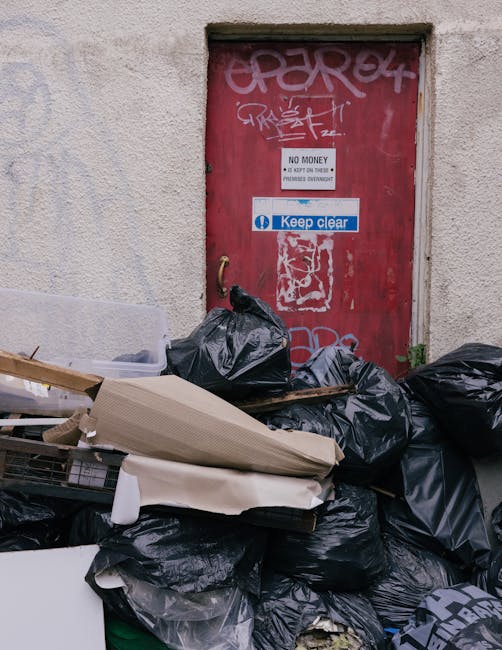
Why avoiding hidden rubbish removal charges matters
Transparent pricing is not just about saving money. It also changes the whole experience. When costs are clear, you can compare services properly, plan your day, and avoid that awkward phone call where someone says the job was "more complex than expected". Hidden rubbish removal charges often show up in small print, rushed quotes, vague descriptions, or surprise add-ons on the day.
In South Kensington, this matters even more because access is often part of the job. A basement flat on a narrow street, a second-floor apartment with no lift, or a commercial unit with limited loading space can all affect labour and timing. None of that is unusual. But if it is not explained upfront, it can become a charge that feels less like a cost and more like a nuisance tax.
For homeowners, landlords, letting agents, office managers, and builders, the risk is the same: an apparently cheap quote that grows once collection begins. That is why it helps to treat rubbish removal the way you would treat any other service in London. Ask questions, get specifics, and keep a paper trail. A calm five-minute check before booking can save a lot of irritation later.
How avoiding hidden rubbish removal charges in South Kensington works
The process is simple in principle. A reputable waste removal provider should explain what is included, what might cost extra, and how they calculate the final price. The key is knowing the difference between a genuine variable cost and a vague excuse for adding fees.
Most rubbish collection prices are influenced by a few practical factors:
- Volume - how much waste needs removing
- Weight - especially important for builders' waste, soil, tiles, and mixed heavy loads
- Waste type - furniture, appliances, garden waste, general household rubbish, or construction debris
- Access - stairs, lifts, distance from vehicle, and parking restrictions
- Sorting time - whether items are ready to go or need manual separation
- Special handling - awkward, fragile, or regulated items may require extra care
That does not mean every provider charges the same way. Some offer fixed-load pricing. Others quote after a photo assessment. A few use hourly labour. Each model can work, but only if the rules are plainly explained. If the quote sounds suspiciously broad, ask for it in writing and request an itemised breakdown where possible. If a provider cannot explain the charge without sounding flustered, that is usually a clue.
For a broader view of how a proper rubbish service should be presented, it can help to read the services overview and the company's notes on pricing and quotes. Those pages should give you a cleaner sense of what is covered before you commit.
Key benefits and practical advantages
When rubbish removal pricing is clear, the benefits are immediate and pretty noticeable.
- Better budgeting - you can compare quotes without guessing what the final bill will be.
- Less stress on the day - no last-minute bargaining beside the front door.
- Faster decisions - if the quote is transparent, you can book confidently.
- Fewer disputes - everyone understands the service scope in advance.
- More suitable service matching - domestic, commercial, furniture, or builders' waste can be priced properly.
There is another, quieter benefit too: transparent pricing usually reflects a more organised business. A company that can explain its fees clearly is more likely to handle access, safety, and disposal responsibly. That does not guarantee perfection, of course. But it is a good sign.
For customers arranging larger clearances, such as a loft clearance or a house clearance, clarity becomes even more valuable. A slightly vague quote for a small bag collection can become a major headache on a full-property clearance. The bigger the job, the more important precision becomes.
Who this is for and when it makes sense
This guide is useful for anyone in South Kensington who is booking or comparing waste services, but it is especially relevant if your clearance is not straightforward. That usually means one or more of the following:
- You live in a flat with stairs, no lift, or tight communal access
- You are clearing bulky items such as sofas, wardrobes, beds, or appliances
- You are dealing with builder rubble, renovation waste, or mixed heavy debris
- You need a same-day or time-sensitive pickup
- You are comparing several providers and the quotes do not quite match
- You manage an office, shop, rental property, or refurbishment project
It also matters if you are new to the area. South Kensington has its own rhythm: busy streets, narrow parking windows, and properties that often require a bit of planning. If you are settling into the neighbourhood, the local context can help. You might find the broader local perspective in considering Kensington local advice useful, especially if you are balancing household organisation with the realities of London living.
To be fair, sometimes the best time to think about hidden charges is before you even have rubbish to remove. That sounds odd, but it is true. Once the bins are full, the clock starts ticking and decision-making gets sloppier. Better to be ready.
Step-by-step guidance to keep costs clear
Here is a simple process that works well for most people. It is not complicated. The trick is just doing the right things in the right order.
1. Define exactly what needs removing
Make a list. Not a vague "house stuff", but actual items: three chairs, one mattress, two boxes of mixed household waste, old shelves, broken printer, garden cuttings, or builder's bags. If you can, separate items by category. This helps prevent a quote from being based on guesswork.
2. Take clear photos before requesting a price
Photos reduce confusion. Include the full pile, any tight corners, stairs, access points, and the route out to the vehicle if possible. A good photo set gives the provider a much better idea of the job. Frankly, it is the difference between a sensible estimate and a wild stab in the dark.
3. Ask what is included in the quote
Before you agree, ask whether the price includes labour, loading, disposal, congestion-related work, VAT if applicable, or additional handling. Also ask whether there are extra fees for inaccessible entrances, heavy lifting, or wait time. If the answer is vague, keep asking. A straight answer should not feel like pulling teeth.
4. Confirm how the final price is calculated
Some companies quote by load size, some by weight, some by labour time, and some combine these methods. There is nothing wrong with any of those approaches as long as they are explained clearly. Ask which method is used and what could change the cost.
5. Check the waste type and special items
Different items may be treated differently. For example, white goods, mattresses, and certain electrical appliances often need separate handling. If your clearance includes mixed materials, mention that up front. The same goes for builders' waste, which can be heavier than it looks. Bags of rubble are deceptive. You think "it's only a few bags", and then one shoulder tells a different story.
6. Read the booking terms carefully
Look for cancellation terms, minimum charges, arrival windows, and payment conditions. A fair policy should be easy to understand. If the terms are buried in awkward language, pause and read again. Better still, ask for a plain-English explanation.
7. Keep the quote and notes together
Save emails or text confirmations. If a provider makes a verbal promise about no extra charges for access, stairs, or loading, get it written down. That small habit can prevent a lot of back-and-forth later.
Expert tips for better results
These are the little things that tend to make the biggest difference. The unglamorous bits, really.
- Don't hide items behind other items in photos. If the load looks smaller than it is, the quote will almost certainly be off.
- Be honest about access. A flight of stairs is not a disaster, but it must be mentioned.
- Separate recyclable or reusable items if you can. It can sometimes make sorting easier and reduces confusion.
- Ask for a one-page summary of what is included. This is especially useful for business premises and landlords.
- Be careful with "from" pricing. A low starting price is fine only if the conditions are crystal clear.
One useful habit is to compare not just the number on the quote, but the amount of detail behind it. Two quotes might look similar, but one may include labour, disposal, access allowances, and VAT more clearly. That is often the better value even if it appears slightly higher at first glance.
If payment safety is on your mind - and it should be - take a look at the company's payment and security information. It is a sensible way to check how they handle transactions before you hand over card details or approve a booking.

Common mistakes to avoid
Hidden charges often happen because the customer assumes the quote means one thing, while the provider means another. That gap is where trouble begins.
- Accepting a quote without asking what it includes. This is the classic one.
- Assuming stairs or awkward access are automatically included. Sometimes they are, sometimes they are not.
- Not mentioning heavy or unusual waste. Builders' waste, white goods, and dismantled furniture can change the job significantly.
- Skipping the terms and conditions. Boring, yes. Necessary, also yes.
- Choosing purely on the cheapest headline price. Cheap can be fine. Cheap and vague is where the pain starts.
- Letting the team arrive without confirming access details. If parking or loading is constrained, the job may take longer than planned.
Sometimes the problem is not even dishonest pricing; it is incomplete communication. But from your side, the outcome is the same: a bill that feels off. So ask the slightly awkward question now. It is much easier than arguing later when the van is already packed.
Tools, resources and recommendations
You do not need complicated software to keep control of rubbish removal costs. A few simple tools are enough:
- Your phone camera - for photos of waste and access points
- A notes app - for recording item counts, dimensions, and any promises made
- A tape measure - useful for bulky furniture or awkward items
- A basic checklist - so you do not forget stairs, parking, or special items
For a deeper look at how the service is structured, the most relevant pages are usually the company's waste carrier licence and compliance details, about us page, and the relevant service page for your job type. If you are clearing a flat, domestic waste collection in South Kensington may be the best fit. For larger mixed jobs, waste clearance and waste disposal in South Kensington is often the broader match.
If sustainability matters to you - and these days it usually does - it is also worth understanding how items are sorted and processed. A provider that explains its approach to recycling and sustainability is often being more transparent overall. Not always, but often enough to matter.
Law, compliance, standards, or best practice
When rubbish is removed, the job is not just about loading a van and driving away. In the UK, waste handling sits within a framework of environmental and duty-of-care expectations. You do not need to become an expert in it, but a few basics help you choose more safely.
First, a legitimate waste carrier should be able to show that it operates responsibly. That means it should be clear about collection, transport, and disposal routes. If a provider cannot explain how waste is handled, that is a concern.
Second, your own duty of care matters too. In plain English, that means you should make a sensible effort to use a proper service and keep records where relevant. This is especially useful for landlords, businesses, and anyone arranging larger clearances.
Third, pricing practices should be easy to understand. Good practice includes clear descriptions, written confirmation, and no surprise charges that were never discussed. It is not too much to ask. In fact, it is the minimum you should expect.
For trust-building, it is helpful to review pages such as insurance and safety and terms and conditions. If you are particularly cautious about privacy when sharing photos or booking details, the privacy policy and cookie policy are worth a quick scan too. Nothing thrilling there, admittedly, but useful all the same.
For commercial customers, the bar is even higher. Offices, shops, and managed properties should insist on clear scope, written confirmation, and sensible scheduling. If that sounds obvious, well, it should be. Yet a surprising number of headaches come from assuming a verbal "yes, fine" is enough.
Options, methods, or comparison table
Different rubbish removal methods suit different situations. Here is a straightforward comparison to help you decide what may work best.
| Method | Best for | Pros | Watch out for |
|---|---|---|---|
| Fixed-load collection | General household waste, furniture, mixed clearances | Simple to understand, easier to compare | Make sure the load size definition is clear |
| Photo-based quote | Jobs where access and item type matter | Convenient and often fast | Needs accurate photos and honest descriptions |
| Hourly labour | Messy or unpredictable clearances | Flexible for changing jobs | Can become costly if the site is harder than expected |
| Specialist waste service | Builders' waste, white goods, office clearances, bulky items | Better handling for specific waste types | Confirm any handling rules or extras in advance |
For most residents, the easiest route is a straightforward fixed or photo-based quote, provided the company is transparent. For larger or more specialised jobs, service-specific pages can help you narrow things down. For example, furniture removal in South Kensington is useful when bulky items are the main issue, while builders' waste disposal in South Kensington is a better fit for renovation debris and mixed heavy material.
Case study or real-world example
A fairly typical South Kensington scenario goes like this. A flat owner clears out a spare room before a move and books a rubbish collection based on a quick message exchange. The initial price sounds reasonable. On the day, though, the team discovers a narrow staircase, one large wardrobe that needs dismantling, and a few extra bags that were not included in the first description. Suddenly the cost is higher.
Now, none of those issues is unusual. The wardrobe needed extra work. The access was tighter than expected. But the surprise comes from the missing details, not from the work itself. If the customer had sent photos, listed the wardrobe, and asked whether dismantling was included, the quote would likely have been more accurate from the start.
Compare that with a second case: a tenant in a garden flat wants to clear out broken outdoor furniture and some cuttings. They send photos, mention the side passage, and confirm there is no lift needed. The provider quotes with those details in mind, the collection goes smoothly, and the bill matches the estimate. Same neighbourhood, same kind of job, very different experience.
If you are near a busy landmark or a well-used route, timing can also matter. People arranging disposal near the museum district sometimes need to plan carefully. A useful local read is rubbish disposal near the Victoria and Albert Museum, which gives a sense of how location can affect scheduling and access. For station-adjacent pick-ups, same-day rubbish collection near South Kensington Station is also relevant.
Practical checklist
Use this before you accept any rubbish removal quote.
- Have I listed every item or waste type clearly?
- Have I sent accurate photos showing the full load?
- Have I mentioned stairs, lifts, parking, or access restrictions?
- Do I know whether labour, loading, and disposal are included?
- Have I asked about heavy items, dismantling, or special handling?
- Do I understand how the final price is calculated?
- Have I checked the terms for cancellations or waiting time?
- Do I have the quote or summary in writing?
- Does the provider appear to be operating with proper compliance and insurance?
- Have I compared the quote against at least one other option if the job is larger?
Expert summary: The cheapest quote is not always the safest choice. The best value is usually the one that explains exactly what is included, what could change, and how the final bill is protected from surprises.
If you are planning a bigger clearance, service-specific pages can make the decision much easier. For example, house clearance in South Kensington is often the right route for full-property jobs, while office clearance in South Kensington suits business premises where timing and discretion matter. For appliance-heavy jobs, white goods and appliance disposal is worth checking.
Conclusion
Avoiding hidden rubbish removal charges in South Kensington is mostly about clarity, honesty, and a little bit of preparation. You do not need to overcomplicate it. Just define the job properly, show the access conditions, ask what is included, and keep the agreement in writing. That alone filters out many of the unpleasant surprises people hate most.
In a place like South Kensington, where homes and businesses can throw up all sorts of access quirks, clear pricing is more than a nice extra. It is the difference between a smooth, tidy job and a bill that leaves you muttering into your tea. And nobody needs that on a busy afternoon.
Get a free quote today and see how much you can save.
With the right checks in place, you can book rubbish removal confidently and get on with your day, which is, in the end, what most people want. Simple. Fair. Done properly.



 Tipper Van - Rubbish Removal and Attic Clearance Prices in South Kensington, SW7
 Luton Van - Rubbish Removal and Attic Clearance Prices in South Kensington, SW